|
|
Contents |
| IN THIS ISSUE |
| USER SUBMISSIONS |
| BOOK REVIEWS |
| KNOX LOUISBOURG |
| LOUIS RIEL - AGAIN |
| WWII - IT'S HISTORY |
| MANITOBA MAPS |
| PRIMARY SOURCE REVIEW |
| LETTERS TO THE EDITOR |
|
|
| February in History |
| Parliament Photos |
| Editor in Chief |
| Michael Apps |
| Staff |
| Jim Morrison |
| Greg Scott |
Knox - The Attack on Louisbourg
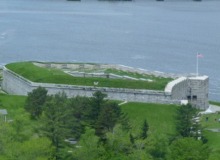
'On the night of the 11th, the enemy destroyed the grand battery which is opposite to the harbour's mouth, and retired into the town; in consequence thereof, Brigadier Wolfe received orders to march with a large detachment, and take possession of the Light-house Point, which, with the island battery, from the entrance of the harbour. We have an increadable deal of labour on our hands, cutting and making fascines, gabions and hurdles; intrenching our camp and posts, erecting blockhouses, throwing up redoubts, making roads for our artillery through a vile country, partly rough(worse, if possible, than the ground we incamped on last year in Halifax) but in general swampy; advancing our lines or approaches, constructing batteries, and skirmishing continually with the rabble in the woods round our camp, who are very troublesome neighbours: such are the employments of the army, often by night as well as by day; yet with inexpressinle pleasure I behold the zeal of the troops surmounting every difficulty, in all which they have noble exampes before them in our general officers.
 'On
the night of the 19th, Brigadier Wolfe opened on the island battery,
which however was not silenced until the 25th; he also quieted the
fire of a frigate that gave us much annoyance. We then (for I was
upon that service) got order to rejoin the army with our artillery,
and leave a small detachment with some ship-guns at the point to
prevent the enemy's repairing their works and batteries on the
island. On the 26th, a party of the enemy sallied out and attempted
to destroy one of our blockhouses by fire, hoping thereby to favour
a coup they had projected (as we surmise) of greater importance; but
they were disappointed and beat back to their garrison with some
loss. A command of marines were landed for the first time, and took
post at the cove, which is to be relived from the fleet. On the
night of the 30th we had a samllalarm from that quarter, the marines
having apprehended an attack from the savages and other irregulars.
The enemy sunk four ships in the harbour's mouth, to obstruct the
channel and prevent out fleet's going in; the troops are growing
sickly, particularly the New-England-men, their disorders most the
small-pox.
'On
the night of the 19th, Brigadier Wolfe opened on the island battery,
which however was not silenced until the 25th; he also quieted the
fire of a frigate that gave us much annoyance. We then (for I was
upon that service) got order to rejoin the army with our artillery,
and leave a small detachment with some ship-guns at the point to
prevent the enemy's repairing their works and batteries on the
island. On the 26th, a party of the enemy sallied out and attempted
to destroy one of our blockhouses by fire, hoping thereby to favour
a coup they had projected (as we surmise) of greater importance; but
they were disappointed and beat back to their garrison with some
loss. A command of marines were landed for the first time, and took
post at the cove, which is to be relived from the fleet. On the
night of the 30th we had a samllalarm from that quarter, the marines
having apprehended an attack from the savages and other irregulars.
The enemy sunk four ships in the harbour's mouth, to obstruct the
channel and prevent out fleet's going in; the troops are growing
sickly, particularly the New-England-men, their disorders most the
small-pox.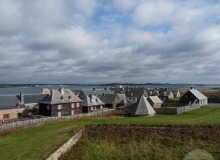 July
the 1st
July
the 1st'A part of the enemy skulked out, to procure some firewood (as 'tis supposed); they were instantly drove back to the town by Mr Wolfe's datachement: deserters are daily coming out to us; they are mostly Germans, say they were basely bettayed and forced into the French service: the enemy's ships in the harbour continue to annoy us considerably.
July the 9th.
'A strong sortie was made by the garrision; and, though their men were shamefully drunk, yet they surprised some of our troops, and a smart recounter ensued; but some companies of grenadiers, coming up, soon put an end to the fray, and repulsed them with the loss of an hundred killed and wounded; most of the latter were taken prisoners; many of them in their retreat threw down their arms, which we also recovered; we had about forty men and officers killed and wounded.
 July
the 11th
July
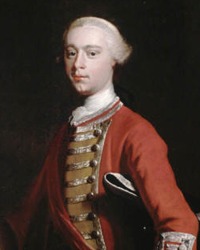
the 11th'Brigadier Wolfe is now about seven hundred yards from the west gate, when he has damaged the town considerably with his shells; he is erecting a battery of four thirty-two pounders and six twenty-four pounders: our most advanced lodgement is not six hundred yards from the garrison. The making of roads for our artillery has been the most painful of our labour and, though now almost completed, they must nevertheless undergo daily repairs: the weather does not generally favour our operations. General Amherst is indefatigable; he visits our outposts, batteries and other works every day; and is continually concerting plans and reconnoitring new places from which he can most sensibly insult the enemy's works and accelerate the siege.
Page 1, 2, 3
|
The Siege of Quebec |
| and the campaigns in North America |
| 1757-1760 |
| by Captain John Knox |
| Edited and Introduced by |
| Brian Connell |
| London |
| The Folio Society |
| 1976 |