|
|
Contents |
| IN THIS ISSUE |
|
|
| August in History |
| Political Cartoon |
| Editor in Chief |
| Michael Apps |
| Staff |
| Jim Morrison |
| Greg Scott |


Hidden History:
Ruthven Park
You never
know what you’ll come across when driving through the
Canadian hinterland. While driving towards the Niagara
Peninsula this summer, we happened to drive through
Haldimand County on the Grand River. As we were leaving the
town limits to our right we saw a sign, tucked away behind a
hedge, indicating a national heritage historical site. Being
the history advocates that we are, we decided to see what
could be found.
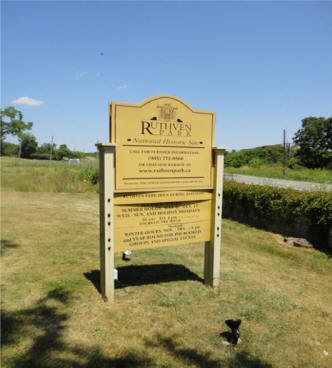
In the quietest
places of Canada, one can find a bevy of fascinating
historical sites
Tucked away in a picturesque nature
preserve, we discovered the 1500 acres of land which
constitute Ruthven Park. Headlining this preserve filled
with historical ruins, a butterfly sanctuary, Carolinian
forests and farmland is a fantastic Greek revival mansion
built between 1845 and 1847 by David Thompson I. Within the
manor lies five generations worth of collective history of
the Thompson family. Our guide took us on a tour through the
massive building, recalling the history of the area, the
characters of the family, and the estate’s future as a
Canadian Historical site.
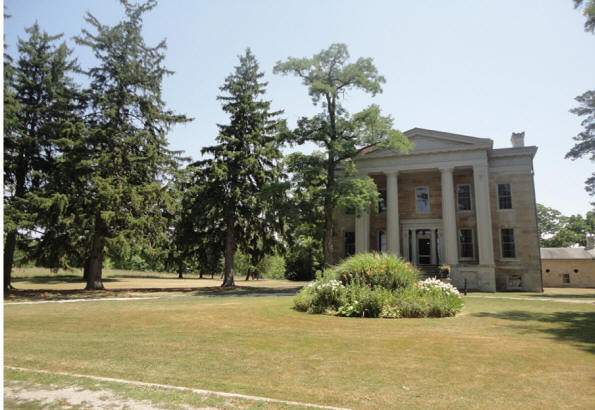
View of the northern
entrance to the main estate building
While aesthetically superb, we found
the most interesting that the stories surrounding the
lifespan of the manor and the lives of its inhabitants
revolved around key periods of Canadian history. Two of the
families’ generations of men fought in Canadian wars, while
also serving in prominent positions within the government,
and acting as host to various famous officials in Canadian
history, including numerous governor generals.
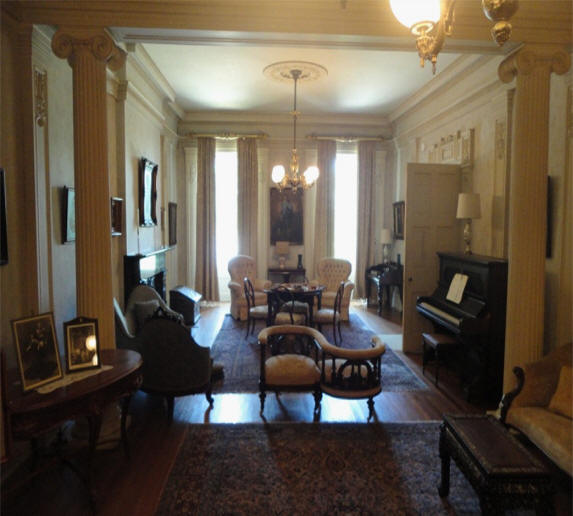
The parlour, where
numerous dignitaries including the Governor General of
Canada were received
Ruthven Manor has many characters
who played key parts in our history. David Thompson I, born
in 1793, the founder of the estate, played a key role in the
War of 1812 as an officer in the Canadian militia. He was
injured in combat during the Battle of Lundy’s Lane in 1814,
later retiring as a lieutenant colonel in order to pursue an
entrepreneurial and political career. His Light Infantry
Pattern (1803) sabre can be viewed within the manor.
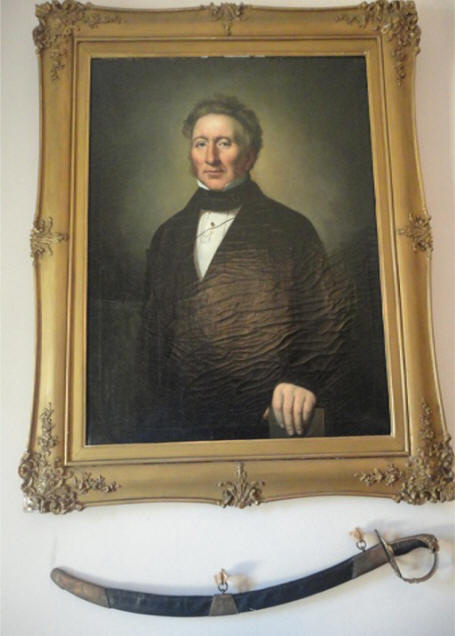
David Thompson I,
with original Light Infantry Pattern Sabre
Later generations of the family
would fight in the First and Second World Wars, where they
served as commissioned officers. The distinctive markings of
each of these men can be found throughout the house. For
example, we discovered that a majority of the paintings in
the house were produced by one of the brothers who served in
the First World War; products of a man’s attempt to fight
the post traumatic stress disorder borne from his time in
the trenches.
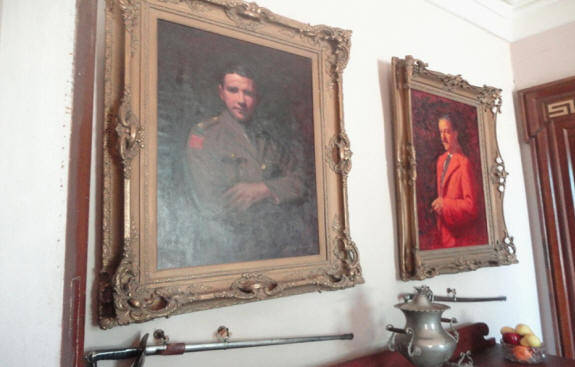
Generations of the
Thompson family fought in Canada’s wars
Ruthven Park also contains
acres of walking and hiking paths to explore. While ambling
by the butterfly sanctuary we came across the family burial
plot; quietly placed in a corner of the estate, this aspect
of the park should not be missed. Further investigation of
the other trails in the park would certainly unveil a wealth
of ruins and history tucked away in the picturesque
landscape.
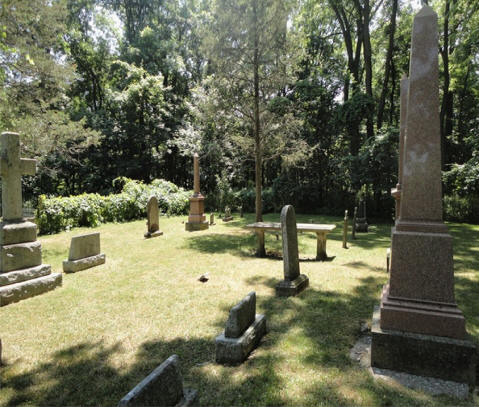
Wander through the
grounds of Ruthven Park and you’ll discover historical time
capsules, such as the family plot
When planning the itinerary for our
Niagara trip, we considered the sites to visit. Fort George,
Queenston Heights, and many other prominent locations came
to mind. Little did we know that while exploring the back
roads of Ontario, we would find one of the many wonderful
volunteer led, historically rich, sites that pepper the
Canadian landscape. Ruthven Park is one of these historical
gems which should not be missed if you’re traveling in the
area.
If you wish to learn more about
Ruthven Park, or would like to make a donation to this
important historical site, please visit: www.ruthvenpark.ca
or call (877) 705-7275.
We thank Ruthven Park for the permission to use our pictures of the site in this feature