|
|
Contents |
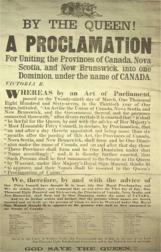
| THE PROCLAMATION |
| THE QUIZ CONTEST |
| PRIMARY SOURCE REVIEW |
|
|
| July in History |
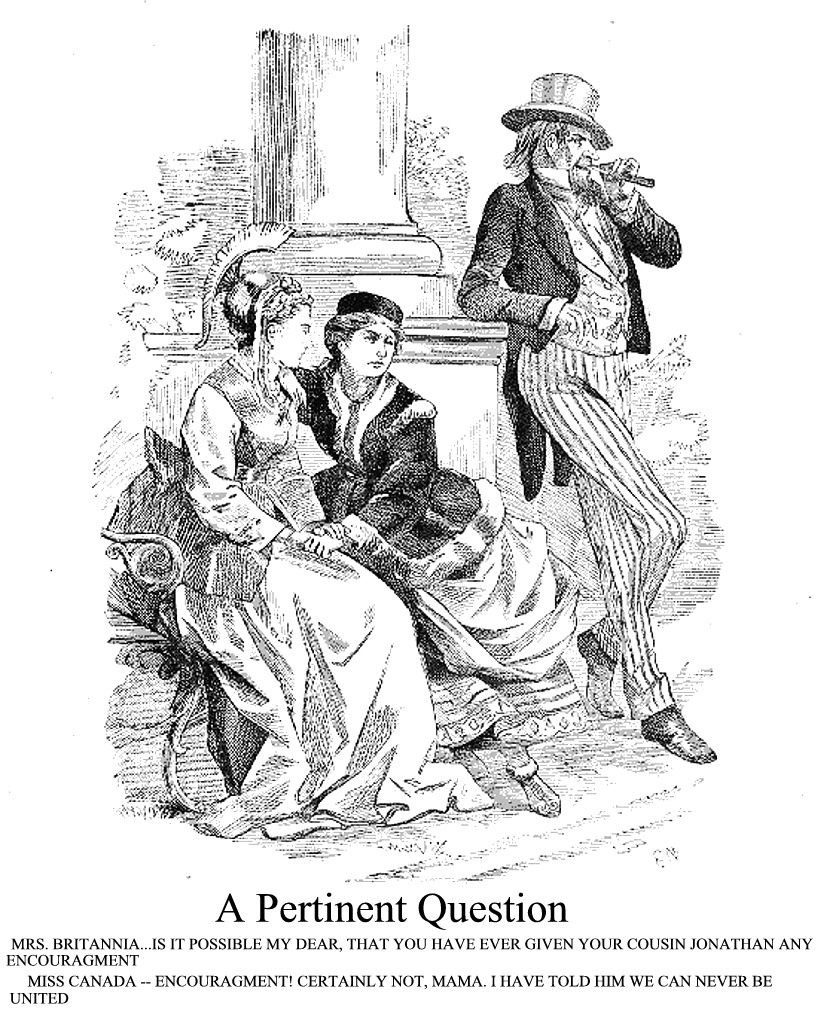
| Political Cartoon |
| Editor in Chief |
| Michael Apps |
| Staff |
| Jim Morrison |
| Greg Scott |
 |
| Next Month |
| LAURIER |
| QUEBEC 1760 |
| Book Reviews |
| The Quiz |
 |
 |

Voyager
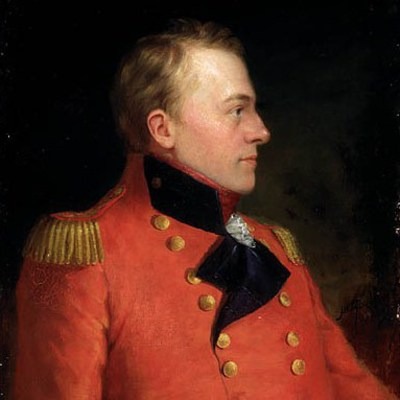
| Letter from the Editor | The Reckless Death of Sir Isaac Brock |
|
On the 1st of July, 1867 Canada became a nation. From small beginnings something great was created and flourishes to this day. Much like Canada in 1867, Voyager today is an entity in its embryonic stage. With each edition we are aiming to evolve our appeal to avid history aficionados; in our June edition we launched our publication with a strong foundation focusing on thematic articles, an overview of 'This Month in History', and a visual section offering readers various maps to contextualize events on a geographic scale. cont.... CANADA DAY July 1st 1867 At midnight of June 30th, 1867
the clock ticked and the new country of Canada was born.
Although the documents would not be signed, and the Queen’s
proclamation would not be read until later in the day, the
celebrations began immediately as the bells rang out from
almost every church and cathedral steeple across the land.
|
When asked to produce an article
on Sir Isaac Brock, I initially sought to strongly criticize
Brock’s reckless disregard for his life at the Battle of
Queenston Heights. After deeper examination of his situation
during the battle and after considering his legacy, I
decided it better to look at how his death has provided a
lasting and potent legacy for our Canadian identity.
|
 MICHAEL
APPS -
MICHAEL
APPS - 
Copyright © 2025 Canada History Society. All Rights Reserved.
mapps@canadahistorysociety.ca
info@canadahistorysociety.ca |
Privacy Policy
| Contact us |
Advertising


