|
|
| Contents |
| BOOK REVIEWS |
| THE 1ST CANADA DAY |
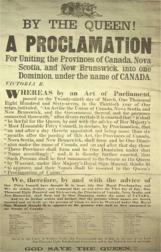
| THE PROCLAMATION |
| THE QUIZ CONTEST |
| PRIMARY SOURCE REVIEW |
|
|
| July in History |
| Political Cartoon |
| Editor in Chief |
| Michael Apps |
| Staff |
| Jim Morrison |
| Greg Scott |
 |
| Next Month |
| LAURIER |
| QUEBEC 1760 |
| Book Reviews |
| The Quiz |
 |
 |
 |
Voyager Primary Source Review
| Title: Merry Hearts Make Light Days: The War of 1812 Journal of
Lieutenant John Le Couteur, 104th Foot
Voyager is proud to
introduce its primary source section. Offering readers a
source relevant to the theme of the month, this new section
aims to enrich the understanding of a topic by means of
firsthand accounts, diaries and other primary source
materials.
Merry Hearts Make
Light Days is the Journal of a young British Lieutenant,
John Le Couteur, of the 104th Regiment of Foot
who was dispatched to the North American station in 1812,
just in time to be a participant in the following conflict
between the British and Americans. Edited by eminent scholar
Donald E.Graves, Merry Hearts is a unique insight into the mind of a young officer
who depicts his experiences with enthusiasm and notable
élan. His account offers lively commentary on Upper and
Lower Canada social life, the dynamic between officers and
soldiers, the difficulties of Canadian winters and most
importantly, meticulous descriptions of the numerous actions
he participates in.
A great strength of
Merry Hearts is the constantly varied topic of
discussion in his entries. One particularly interesting
passage from an early entry in his diary describes the
composition of his regiment at the time of their dispatch to
Upper Canada from New Brunswick in February of 1813:
“It must here be observed that the
regiment was admirably composed for the service, having been
raised in Nova Scotia and New Brunswick, principally in the
latter province, from the descendants of the veterans who
had served in the former war, a class of loyal settlers,
equally attached to the soil and to Old England. There were
also a number of Canadians in it, so that these, as well as
the New Brunswickers being, as it were, indigenous to the
country were thoroughly fitted to endure cold and hardships;
good axemen, able to build a log hut with an axe alone; good
boatmen, good marksmen, many of them as expert as Indians in
a canoe, and as alert as hunters on snow shoes. The morale
of the corps was not at all inferior to its physique, -
there is a characteristic cheerfulness in the Canadian
soldier, inherited from his French ancestry, which being
lively and good tempered, tended much towards lightening the
labours of a heavy march, or the hardships of a campaign...”
(p.94)
It is interestingly clear from his description that a great
number of his regiment was composed of men native to the
Canadian station. His depiction of the heartiness and worthy
martial abilities of the Canadian soldiers is replete with
praise. This is a remarkable passage because it presents how
strongly the Canadian identity was developing in the minds
of British officers, and how culturally distinct this group
of people were becoming. In lieu of Canada Day it is
fascinating to see the cultural roots of Canadian identity
depicted so clearly by an officer’s passing remarks in a
journal from 1813.
John Le Couteur’s journal has numerous anecdotes pertaining
to the First Nations allies which the British employed
regularly and the Americans feared greatly. Two short
passages that took place during and after Beaver Dams are
highly illustrative of the aftermath of an engagement where
natives were employed: (24 June 1813)
“The Indians were very savage – one
tomahawked an American close to me during the parley – they
would have destroyed them all but for us. All the dead were
scalped. Their heads divested of the scalp looked white and
clean, some as it they had been washed...”
(pp.126-7) (17 July 1813)
“Our Indians intercepted a party of the
enemy, scalped forty-five and brought in two officers and
fourteen prisoners. I saw one Indian picking the flesh off a
scalp.” (p.129)
While one should generally be wary of hyperbole behind the
violent depictions of native warriors, these visceral and
straightforward depictions are very credible. Primarily, Le
Couteur had no particular reason to exaggerate since they
were recorded in his journal for private consumption;
secondly, his lack of moral judgement on these acts imply
that he had no reason to defame his new world allies.
These two passages pertaining to Canadian identity and
Native war practices are but a taste of what
Merry Hearts
has to offer to the 1812 enthusiast.
Any reader hoping to glean valuable primary source insight
into the mind of a combatant during the War of 1812, and
peruse an entertaining and varied depiction of soldierly
life in 19th century Canada should not hesitate
to read Merry Hearts
Make Light Days. In early 2012 a new edition of this
valuable journal was released by Robin Brass Studios.
[Merry Hearts Make Light Days: The War of 1812
Journal of Lieutenant John Le Couteur, 104th
Foot. Ed, Donald
E.Graves. Carleton University Press: Ottawa, 1993] Donald E.
Graves, one of Canada’s
best known military historians, is the author, co-author or
editor of 18 full-length books dealing primarily with the
War of 1812 and the Second World War. Donald Graves is the
managing director of Ensign Heritage Group, a consulting
firm that provides military historical expertise to historic
sites, government departments, film companies and
individuals. He resides in the Mississippi Valley of Upper
Canada with his author wife, Dianne. A new edition of
the engaging Merry Hearts Make Light Days has been published by
Robin Brass Studio.
Their catalogue can be found at
http://www.robinbrassstudio.com.
Voyager extends
their greatest thanks to Robin Brass Studio and Mr.Donald
E.Graves for the use of these selected passages. |
Copyright © 2025 Canada History Society. All Rights Reserved.
mapps@canadahistorysociety.ca
info@canadahistorysociety.ca |
Privacy Policy
| Contact us |
Advertising


