|
|
| Contents |
| BOOK REVIEWS |
| THE 1ST CANADA DAY |
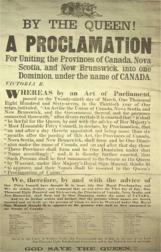
| THE PROCLAMATION |
| THE QUIZ CONTEST |
| PRIMARY SOURCE REVIEW |
|
|
| July in History |
| Political Cartoon |
| Editor in Chief |
| Michael Apps |
| Staff |
| Jim Morrison |
| Greg Scott |
 |
| Next Month |
| LAURIER |
| QUEBEC 1760 |
| Book Reviews |
| The Quiz |
 |
 |
 |
Previous Brook Continued..
Brock assembled a modest
force of the light company of the 49th Foot and
Lincoln militia, leading them in a suicidal charge up the slopes
to retake the height. Shortly after the attack commenced, Brock
was shot in the wrist; within moments of this first wound he was
targeted by an American rifleman and shot through the heart.
Later accounts depict Brock encouraging his men to push on with
his last breaths, although it has generally been accepted that
he would have been too incapacitated and near death to do so.
Shortly after, a second assault was attempted by Lieutenant
Colonel John Macdonell (who was then mortally wounded), which
fell short; the heights remained in American hands until General
Roger Hale Sheaffe arrived and retook the position after a
meticulous and well thought out manoeuvre which took the under
supplied occupying Americans from the rear, effectively forcing
them to surrender.
It is difficult to justify the death of a popular and talented
senior officer when considering the result of the attack. Had
the counter attack successfully re-taken Queenston Heights then
reconciling this major loss would be significantly easier.
Simply stated, Sir Isaac Brock made a rash, foolhardy and
genuinely suicidal assault with a minor assembly of British and
colonial troops against an enemy of undetermined strength who
were defending from a position of overwhelming advantage.
Furthermore, leading from the front and wearing the uniform of a
high ranking British officer, Brock was an obvious target for
the numerous American sharpshooters trained to mark senior
commissioned and non-commissioned officers. Not only did this
reckless assault result in numerous casualties, but also denied
the British a leader who had used his exceptional tactical
acumen to win glorious victories against the Americans, such as
the infamous assault of Detroit earlier in 1812. His offensive
capabilities as a leader would be sorely missed.
That being said, there is a genuine bravery to recognise when
such a suicidal act is undertaken, and the intrinsic value of
his death should not be overlooked. When considering Brock’s
earlier tactical choices and his disposition which favored
audacious offensive action, his choice to attack an unknown
number of hostiles in a frontal assault is not out of character.
He recognised that once the Americans were able to lock down the
heights then surely the battle would end in British catastrophe.
While this does not suggest that the attack was the best course
of action, it was most likely the easiest decision to make.
Overall, however greatest value derived from the general’s death
was the iconic and heroic figure which resulted from his
suicidal charge. By setting this selfless example Brock inspired
fellow soldiers to avenge him, and imprinted in Canadian memory
the fact that even the highest members of the military family
were willing to put themselves in danger to defend Canada from
annexation. The value of the hero cannot and should not be
underestimated.
Today Brock’s Monument stands tall at Queenston Heights,
reminding us that two hundred years ago a daring and courageous
general led a hopeless charge up that steep summit. This charge,
although rash and costly, brings to mind today that as a nation
we as Canadians have a heavy torch to carry. On the eve of
Canada Day we must remember to appreciate heroes like Sir Isaac
Brock.
Copyright © 2025 Canada History Society. All Rights Reserved.
mapps@canadahistorysociety.ca
info@canadahistorysociety.ca |
Privacy Policy
| Contact us |
Advertising


